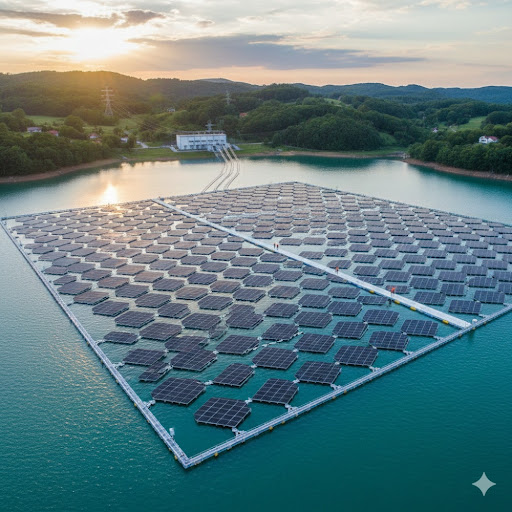
Floating Photovoltaics (FPV), also known as “floating solar,” is an innovative technology that involves installing solar panels on floating platforms anchored over bodies of water, rather than on land or rooftops. This technology is gaining traction due to several strategic advantages.
Why Choose Floating Solar?
The benefits of this technology extend beyond power generation to include:
- Land Use Efficiency: It serves as an ideal solution for nations with high population density or limited land, by utilizing bodies of water (such as dam lakes, reservoirs, and seas) without encroaching upon agricultural or real estate land.
- Increased Efficiency (The Natural Cooling Effect): The presence of water beneath the panels acts as a natural cooling system. Solar panels lose efficiency as temperatures rise; therefore, this natural cooling can increase energy production efficiency by 5% to 15% compared to land-based plants.
- Reducing Water Evaporation: Covering water surfaces—particularly dam lakes in hot climates—significantly reduces water loss due to evaporation, contributing to water resource conservation.
- Improving Water Quality: By limiting direct sunlight exposure, FPV reduces algae growth, which improves the overall quality of the water.
Proposed Application: Bahr Al-Najaf as a Strategic Model
Based on technical criteria, an analytical study of the “Bahr Al-Najaf” region reveals highly promising potential. The region’s solar radiation (approximately 5.5–6 kWh/m²/day) exceeds standard requirements. Furthermore, the study indicates that annual operating hours in Najaf are excellent, reaching approximately 3,140 hours per year.
However, the study identified several technical challenges that must be addressed:
- Maintenance: Due to low annual rainfall, intensive periodic cleaning (every 1–2 weeks) is required to manage dust accumulation.
- Material Selection: The nature of the water in Bahr Al-Najaf necessitates the use of materials resistant to high salinity to ensure the longevity of the platforms.
This technology is considered the most suitable method for generating electricity in Najaf. It effectively exploits the region’s intense solar radiation, while simultaneously helping to reduce water temperatures, thereby decreasing evaporation rates and improving water salinity levels.