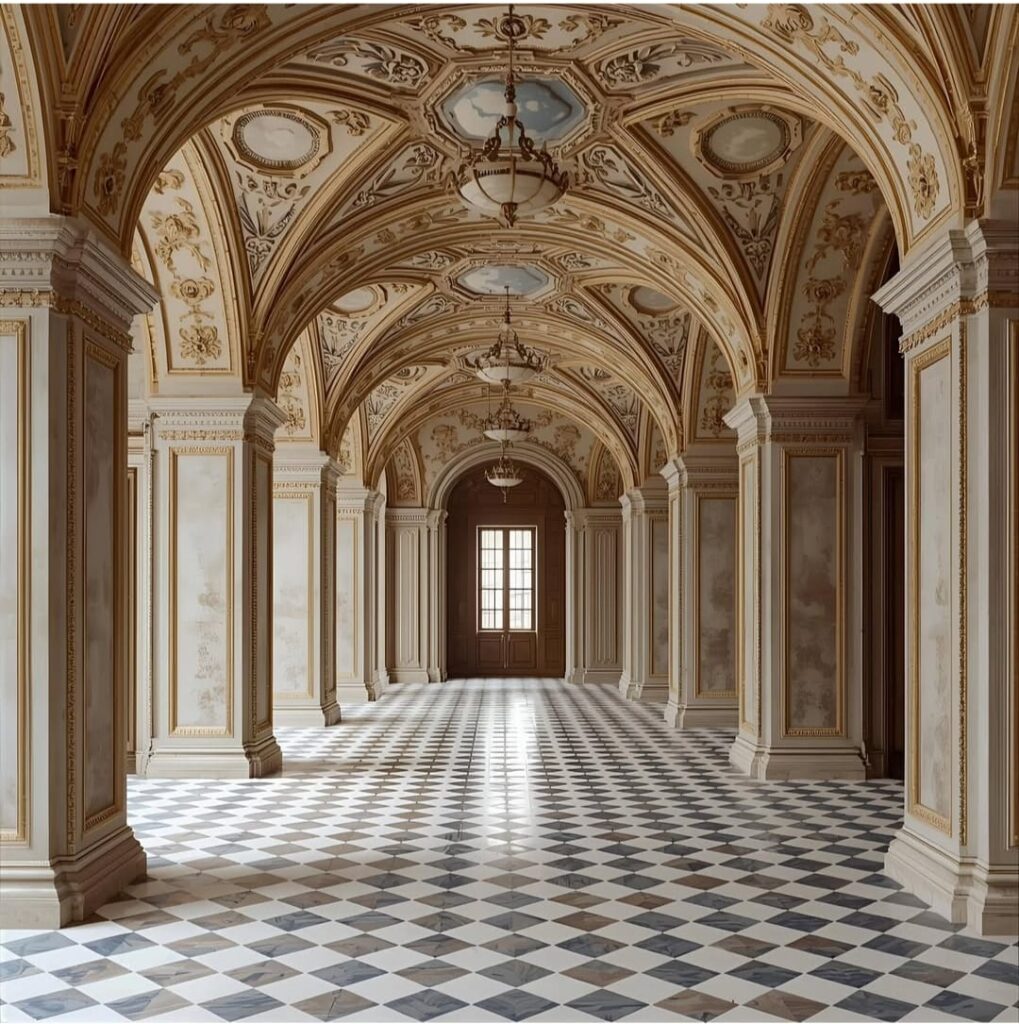
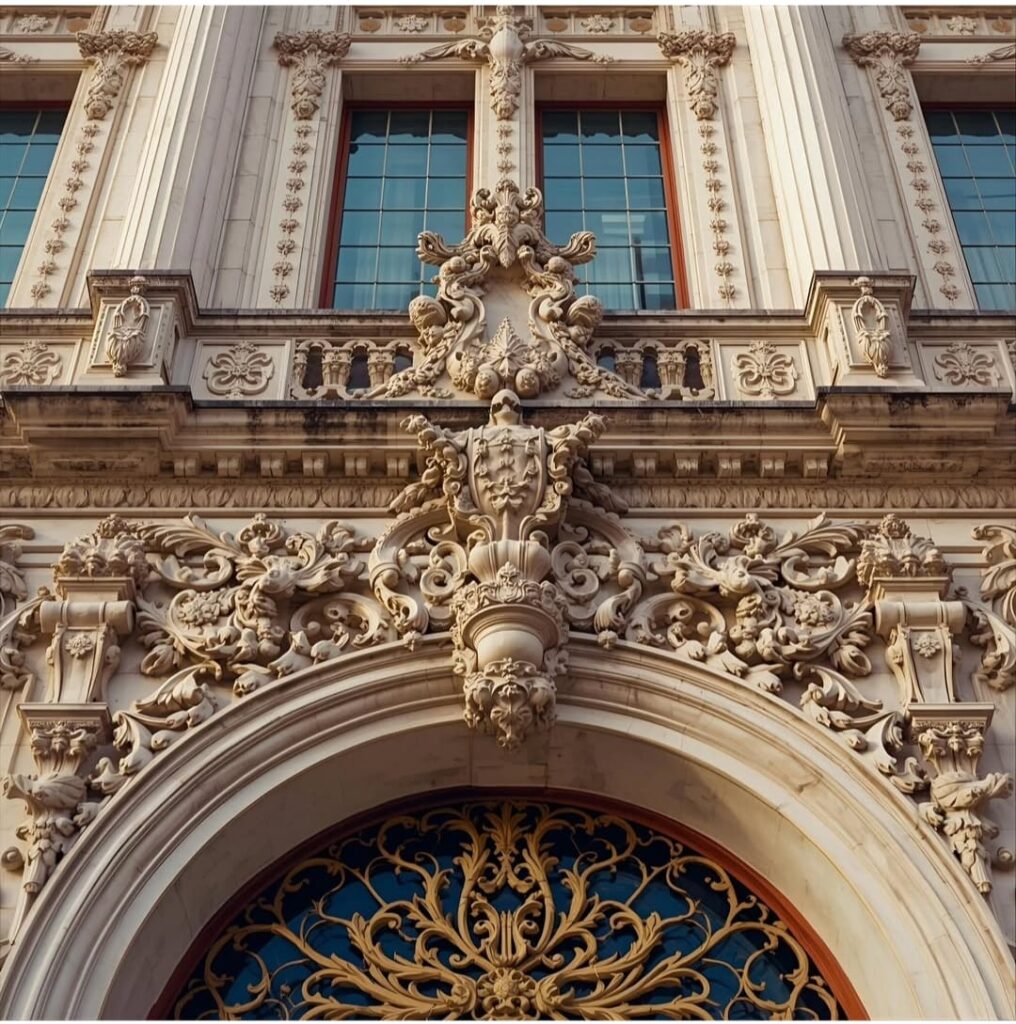
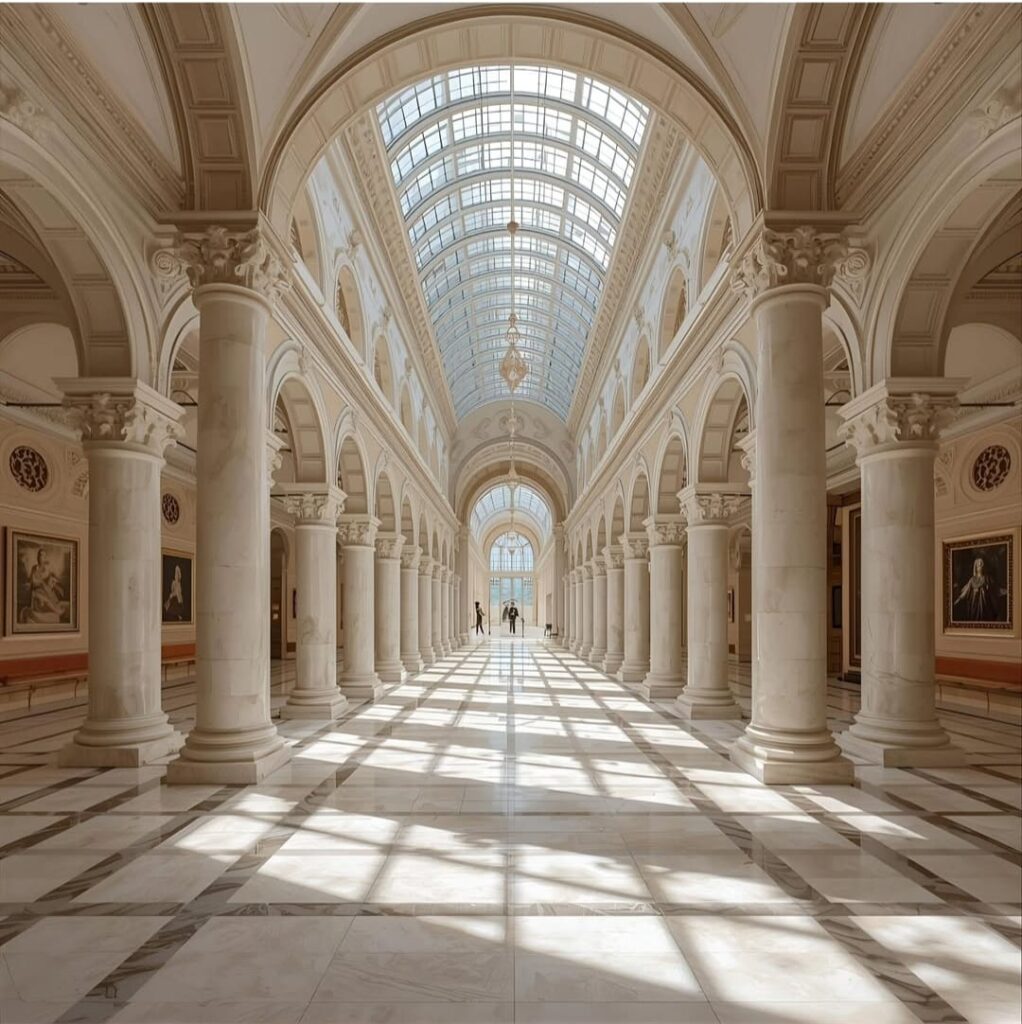
Ornamentation in architecture is an active element that goes beyond mere surface embellishment; it employs carved, painted, or applied artistic elements designed to adorn the facades and all components of a building. It represents an integrated visual language carrying deep historical and cultural connotations that unfold across several main axes:
The Importance and Functional Significance of Ornamentation
- Expressing Identity: Ornamentation plays a pivotal role in distinguishing one civilization from another, which is clearly evident when comparing traditional Islamic ornaments with uniquely styled Gothic motifs.
- Transmitting Beliefs and Narratives: Ornaments sometimes take on narrative dimensions to document and depict religious or mythological stories, as seen clearly in Egyptian temples and historical churches.
- Enriching Sensory Experience: Decorative details contribute rich layers of depth, beauty, and visual splendor to architectural spaces.
- Masking Flaws and Partitioning Spaces: Ornaments are used as clever architectural solutions to highlight a specific building element, break the monotony of walls, and conceal visual imperfections.